EN
 English
 Español
 Deutsch
Relaxmove
Relaxmove
Relaxmove
Relaxmove
Relaxmove
Relaxmove
Relaxmove
Relaxmove
Relaxmove
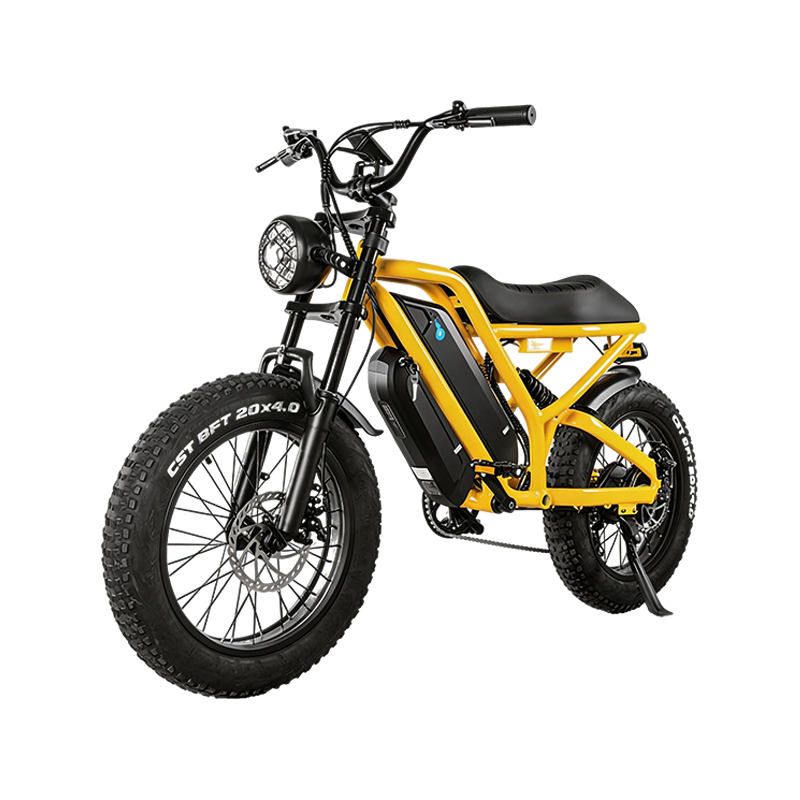
A standard electric bike for outdoor riding has narrow tires that sink into sand and slip on loose gravel. A fat tire electric bike runs tires four inches wide or more. The wide tire floats over the soft ground, grips the loose surface, and absorbs the bumps that the narrow tire transmits to the frame. The motor assists the pedal, so the rider covers the distance without arriving exhausted. For the trail, the beach, the snow, and the rough fire road, the fat tire bike opens the terrain that the standard bike cannot touch.
The Tire Is the Whole Idea
The tire is the difference. A four-inch tire at low pressure flattens against the ground and creates a wide contact patch. The wide patch spreads the rider's weight and the bike's weight over more surface area. The bike does not sink into the sand and does not slip on the gravel.
The pressure matters as much as the width. A fat tire at 20 psi rides like a standard tire. The same tire at 8 psi floats over the soft ground. The rider who adjusts the pressure for the terrain gets the most out of the fat tire. The bike that ships with a low-pressure gauge and a pump supports the rider who does.
The Motor and the Battery
The motor is a hub drive or a mid drive. The hub drive is simpler and cheaper. The mid drive uses the bike's gears and climbs better. The fat tire bike usually runs the hub drive on the entry models and the mid drive on the trail models.
The battery is a lithium pack on the downtube or the rear rack. The range depends on the assist level, the terrain, and the rider's weight. The fat tire bike uses more energy than the standard bike because the tire has more rolling resistance. The battery has to be sized for the range the rider expects.
The Frame and the Suspension
The frame is aluminum or steel. The fat tire adds weight and the frame has to handle the load and the torque. The trail models add the front suspension fork to absorb the bumps that the tire does not. The rigid fork is lighter and simpler and suits the beach and the snow.
The brakes are the disc type. The fat tire bike is heavy and the rim brake does not stop it in the wet. The hydraulic disc brake is the standard on the trail models. The mechanical disc is the entry option.
Here is what a fat tire electric bike for outdoor riding has to deliver:
- Tires four inches wide or more with the low-pressure capability
- Motor matched to the terrain and the rider's weight
- Battery sized for the range the rider expects
- Frame that handles the weight and the torque
- Disc brakes that stop the heavy bike in the wet
- Suspension fork on the trail models
Where the Bike Rides
The beach rider floats over the sand. The snow rider grips the packed trail. The trail rider absorbs the rocks and the roots. The hunter and the fisherman use the fat tire bike to reach the spots the truck cannot.
The Bike That Stops on the Soft Ground
The narrow tire sinks and the rider walks the bike. The fat tire does not. The motor is undersized and the bike cannot climb the hill. The right motor climbs. The battery fades and the rider is stranded. The right battery brings the rider home. The brake is weak and the heavy bike does not stop. The disc brake stops.
A fat tire electric bike for outdoor riding opens the terrain that the standard bike cannot reach. The tire floats. The motor assists. The brake stops. Choose a bike with the right tire, the right motor, and the right battery.